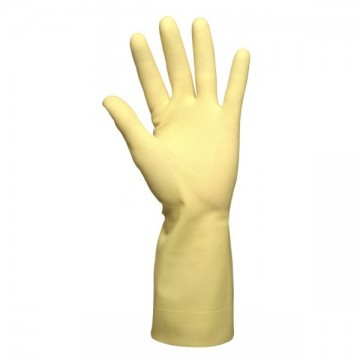
Work & Household gloves
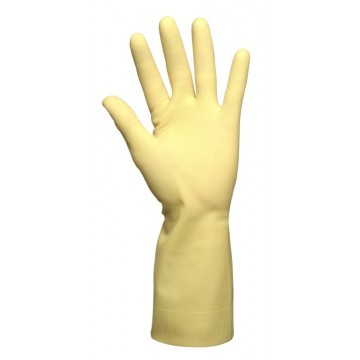
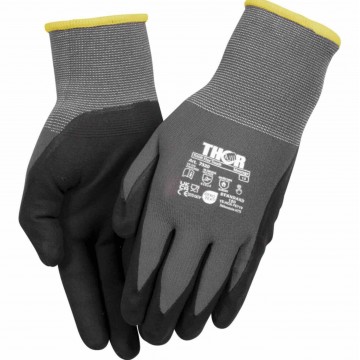
Work and household gloves are reusable and designed for long-term hand protection against mechanical damage, chemicals, heat, and cold. Made from natural latex, nitrile, neoprene, or textile with polyurethane or latex coating. Different gloves suit different tasks: thick rubber gloves for cleaning, knitted gloves with nitrile coating for warehouse work, chemical-resistant models for laboratories. Sizes from S to XXL.
There are 9 products.
Work and household gloves: hand protection for daily use
Work and household gloves are built for repeated use when hands need protection from chemicals, heat, mechanical damage, or simple dirt. Unlike disposable gloves, these are thicker, more durable, and reusable — a practical choice for both professional and domestic settings.
Work gloves are needed in construction, gardening, mechanics, and warehouse operations.
In cleaning services, household gloves protect hands from harsh cleaning agents , acids, alkalis, and disinfectants. Kitchen staff use them for dishwashing and general maintenance. In industry, work gloves are essential when handling rough materials, sharp objects, or hot surfaces.
In agriculture and estates, household gloves suit work with fertilisers, plant care, and general outdoor tasks. Their sturdy construction means one pair lasts weeks or even months.
Most popular materials
- Rubber (latex). flexible, fits snugly, suitable for household cleaning and light tasks
- Nitrile. resistant to many chemicals, oil, and grease. Ideal for industrial work and extended chemical contact
- PVC (vinyl). a budget option for light tasks without heavy chemical exposure
- Textile with coatings. knitted gloves with latex, nitrile, or polyurethane coatings work well for assembly and warehouse tasks
The right size and type depends on the task at hand.
Gloves that are too large slide around and hinder work; too small and they strain the hands. Most manufacturers offer S, M, L, and XL sizes. Pay attention to glove length , longer models (up to the elbow) provide better splash protection when working with liquids.
If you work with disinfectant cleaners or strong chemicals, choose gloves with an AQL certification that indicates the level of liquid permeation protection.
Work gloves and other protective clothing
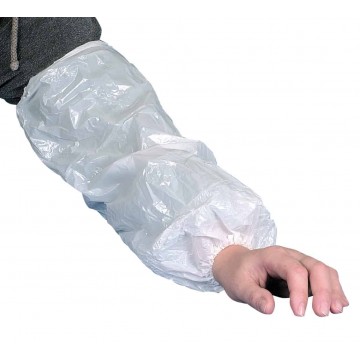
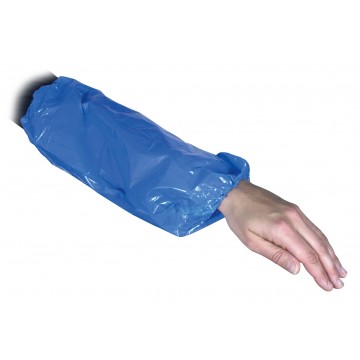
Work gloves are just one part of a full hygiene clothing setup. Cleaning tasks also benefit from aprons and sleeve covers, while dusty environments call for respirators. Use shoe covers for floor protection.
Post-work hand care matters too. We recommend professional soap and hand sanitiser. To round out your cleaning supplies, browse our cleaning tools catalogue.